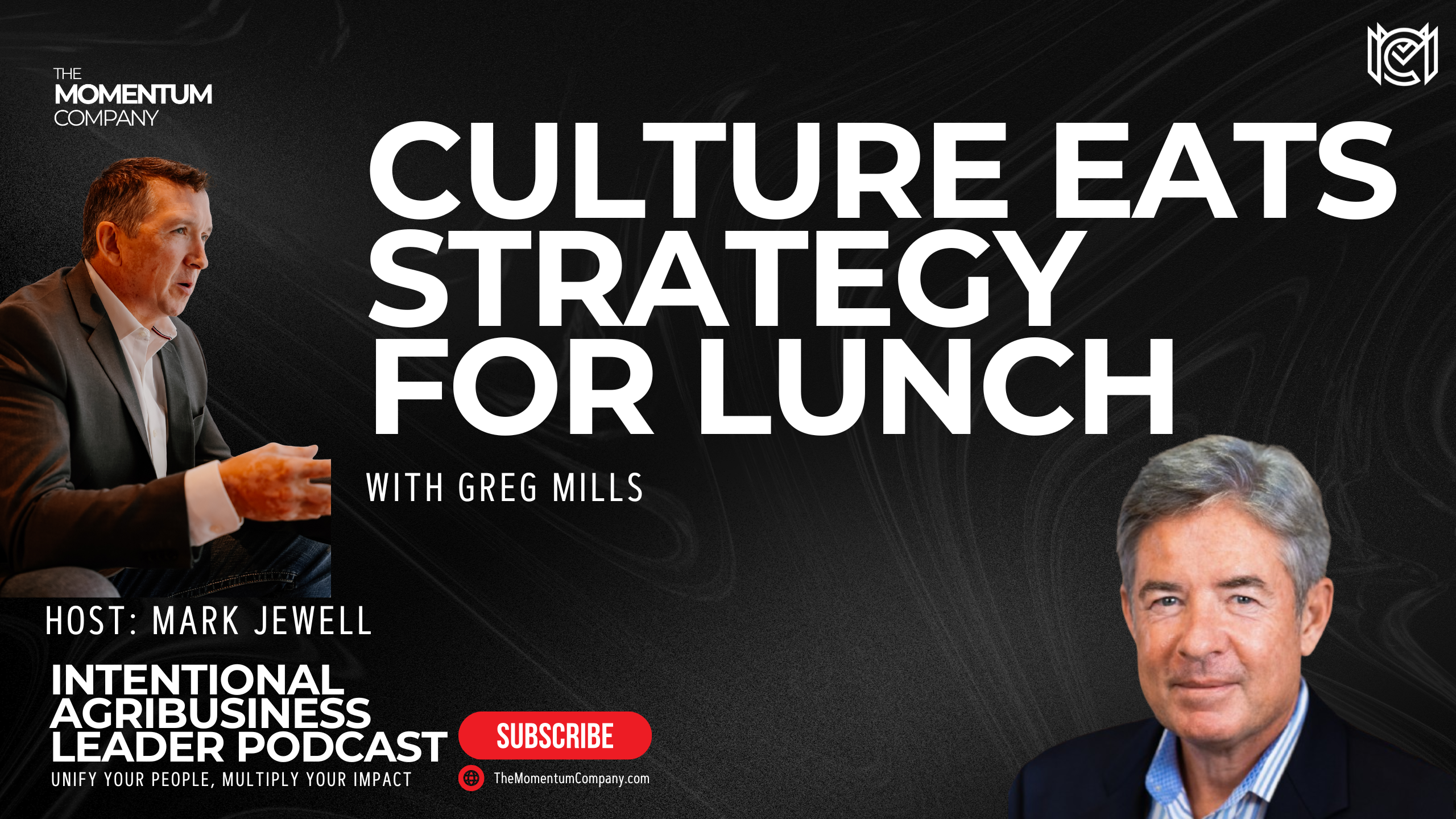
Intentional Leadership in a Complex World: A Conversation with Mark Jewell
In my recent conversation with Mark Jewell on The Intentional Agribusiness Leader Podcast, we explored a topic that continues to shape every industry I’ve worked in, from crop insurance and ag tech to global food systems: what does it truly mean to lead with intention inside complex organizations?
With more than 25 years inside ADM and additional years advising CEOs, founders, and ag-focused teams, I’ve seen how the right leadership behaviors can accelerate alignment, strengthen culture, and drive results, even in highly regulated, globally distributed businesses.
What Mark and I discussed is something many leaders feel but rarely articulate:
scale and predictability often come at the cost of connection and innovation.
And yet, the leaders who make the greatest impact don’t accept that trade-off. They bridge it.
This episode became a deep look into how leaders create clarity, trust, and engagement even when the systems around them push toward rigidity and routine.
1. Culture Always Comes First
I’ve said it for years, and I stand by it: “Culture eats strategy for lunch.”
You can build the best strategy deck in the world, but if your team doesn’t believe in the mission or trust the people leading it, execution will stall.
A high-trust culture replaces the need for micromanagement. It allows teams to move with speed because they’re aligned, not coerced.
In agribusiness, where weather, markets, and logistics can change overnight, culture becomes your competitive advantage.
2. Clarity Is the Leader’s Greatest Responsibility
One of the biggest misconceptions in leadership is assuming clarity after saying something once or twice. In reality, clarity is built through repetition, intentional communication, and modeling.
If your team doesn’t understand the mission, it’s not their fault it’s yours.
Leaders must be disciplined communicators. Whether leading crop insurance adjusters, global merchandising teams, or startup founders, I’ve found that clarity is one of the strongest predictors of success.
3. Real Leadership Happens When the Lights Aren’t On
One story I shared with Mark involved a late-night moment unloading safety equipment for adjusters who were heading into the field the next morning.
It wasn’t a scheduled meeting. It wasn’t a photo op. But it mattered.
Small, unseen actions build credibility.
That’s where culture becomes real, in the decisions leaders make when no one is watching.
4. Strategic Thinking Requires Permission to Pause
Too many leaders feel guilty about taking time to think.
But proactive strategy can’t happen during emergencies.
Stillness is not laziness; it’s leadership.
The organizations that thrive are the ones where leaders deliberately build time to think, question assumptions, and sharpen their perspective before making decisions that affect hundreds or thousands of people.
5. Build Environments That Encourage Ownership
Whether empowering adjusters to design the “perfect claim process” or recognizing local heroes across continents, I’ve always believed that leadership isn’t about controlling tasks, it’s about creating the environment where others can lead.
- Ownership drives engagement.
- Engagement drives performance.
- Performance drives culture forward.
Intentional leaders remove obstacles, align teams to the mission, and help people see how their work contributes to something larger.
Action Steps for Today’s Leaders
If you’re looking to lead more intentionally, consider starting here:
•Audit your culture. Is it defined by trust, clarity, and ownership?
•Develop your “stump speech.” A consistent message that anchors your mission across teams.
•Schedule weekly thinking time. Strategy requires space.
•Model servant leadership. Do something this month when no one is watching.
•Revisit the fundamentals. Books like The Speed of Trust, Drive, and Grit remain timeless for a reason.
Who Should Listen to This Episode
This conversation is especially valuable if you are:
•A senior or emerging agribusiness leader navigating corporate complexity
•A CEO or GM building clarity and culture across your organization
•A small business owner scaling with purpose
•A leader trying to balance strategy, stewardship, and humanity in your role
Listen on Apple or Spotify via the links below.
Spotify: https://open.spotify.com/episode/2EXkCRPW58FRYucalgLjj5?si=uPDTouBnRWqfyLu6yb55vA